Top 5 climbers to grow
Our top 5 climbers to grow have been chosen, so you can decide which you would like to grow up your trellis or fence or perhaps a pergola and for privacy. Many climbers can even be grown in larger containers with support or a back board of trellis so they have something to climb up. There are so many to choose from, with some growing more vigorously than others. Some with flowers and some with varied foliage. Many climbers can be great for wildlife. They can encouraging insects into the garden, provide food for birds and bats to eat plus resting and nesting spaces as well. Whichever climber you choose, it is sure to add interest and delight to your garden.

- Clematis ‘Taiga’
- Rambling Rose
- Honeysuckle
- Virginia Creeper
- Star Jasmine
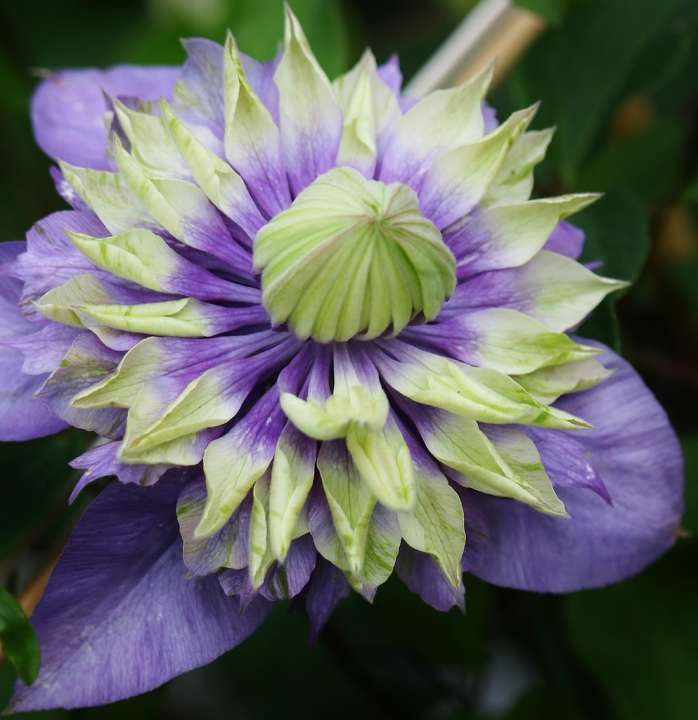
1. Clematis ‘Taiga’
There are so many varieties of Clematis to choose from, there really is one or more for every garden, every aspect and most soils. But if you are looking for an absolute showstopper this Clematis which was a nominee for the RHS Chelsea Flower Show Plant of the Year Award is a stunner. With lots of flowers which almost look like a Passion flower, it’s a hardy climber and very easy to grow and care for.
2. Rosa Rambling Rector
This rambling rose has many large clusters of creamy white flowers all the way through from early summer through to late summer. The hips are red and as a vigorous rambler you can grow it for privacy or to hide unsightly walls and fences. It will even grow on a north facing wall and due to the rambling habit, looks great in a wildlife garden.

3. Honeysuckle ‘Dart’s World’ (Lonicera japonica)
There are plenty of honeysuckles to choose from and with some of the best scents in the garden, they are ideal to be planted somewhere near where you will sit or walk by. This variety flowers from late spring through to late simmer with dark pink flowers that change shade as they age. This will grow quickly and is a great feature climber.
4. Chinese Virginia creeper (Parthenocissus henryana)
You may know the well known colour changing climber that soon takes over, but this one is far less vigorous and can even be grown in smaller gardens. The flowers and berries, although loved by bees, are fairly insignificant. It’s the autumn colour that really stands out. Easy to grow in fertile, well drained soil, it will soon climb up a supporting structure.

5. Star Jasmine (Trachelospermum jasminoides)
This is a stunning, fragrant evergreen climber with dark green leaves that change colour in autumn and put white star shaped flowers in simmer. Easy to grow it will soon climb if planted in well drained soil with full sun. This can also be grown inside. Hardy down to about -10°C, so not ideal for colder areas.
Choose your next climber from our range in store. For the best range of climbers, come in store between March-June.