Top 5 drought tolerant plants
Planting these top 5 drought tolerant plants means they will thrive in dry conditions and longer hot summers which will ultimately mean you can have a low maintenance garden with the environment in mind. All plants need water, but drought tolerant plants need far less, meaning you can use the water from your water butt for other plants that need it. Creating a dry garden is great for hot spots and there are many plants that flower, have texture and fragrance perfect for a drought tolerant space. Many will have long roots which are able to draw up water from deep below the surface and others have evolved to grow smaller leaves meaning less transpiration and others may have fleshy stems where they store water for times of low rainfall.

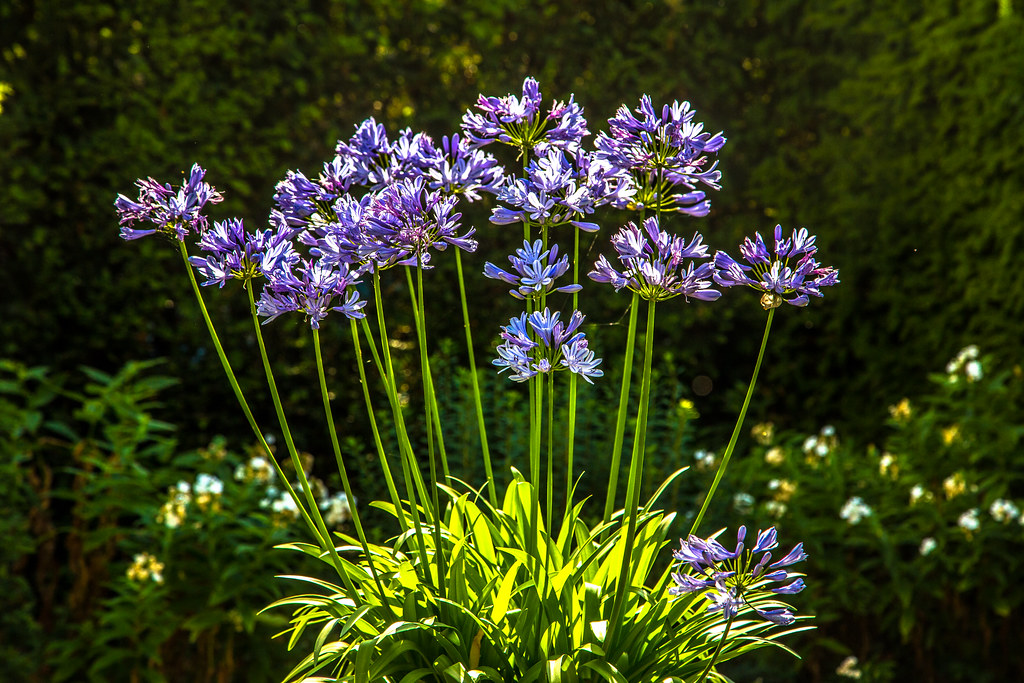
1. Agapanthus (Lily of the Nile)
A really well known and distinctive plant that grows really well in containers or in garden borders. There are many varieties but we love ‘Fireworks’ as the lilac and white flowers look just like fireworks at the top of the long sturdy stem. Agapanthus need water as they establish but after the first year they will need much less.
2. Eryngium (Mediterranean Sea holly)
The spiky lilac, blueish bracts surrounding the cone like centre of little flowers is really stunning and make a bold statement in a sun filled dry garden. Very little water needed and the flowers look really pretty in a cut flower bouquet.

3. Oenothera (see top photo)
Flowering through midsummer into autumn often where nothing else is growing, the white and pinkish flowers float gracefully in the breeze and will thrive in full sun and well drained soil. Oenothera is a lovely addition to any garden giving it a whimsical feeling, especially if planted amongst grasses and other drought tolerant perennials.
4. Sedum (Stonecrop)
These succulent plants retain water in their fleshy leaves, making them ideal for dry summers. They come in various forms, some are low growing and others more upright which will work well in a border with other late summer/autumn flowering perennials.

5. Nepeta (Catmint)
A wonderful drought tolerant plant again needing very little watering. Available with lilac, pink or white flowers, which bees and other pollinators adore. Looks wonderful in a border with mixed perennials and can flower for a long period through the summer. Grow in full sun and well drained soil.

There are many more plants that will thrive in drought conditions. Always read the label on any plants you buy which will show if the plant needs a lot of watering or not. Other drought tolerant plants include Erigeron, Verbena bonariensis, and Liriope.
We have many plants in store for a dry garden and advice on hand when you visit us.