Scarifying and Aerating Lawns

The best spring lawns begin in autumn! Now is the time to scarify and aerate your lawn to ensure that it remains strong and healthy throughout the winter months, especially before our northern temperatures drop in October. Early lawn aeration and scarification provide your grass with a necessary boost, allowing air, water, and essential nutrients to penetrate the root zone—the three vital components for a thriving lawn.


What does Scarifying mean?

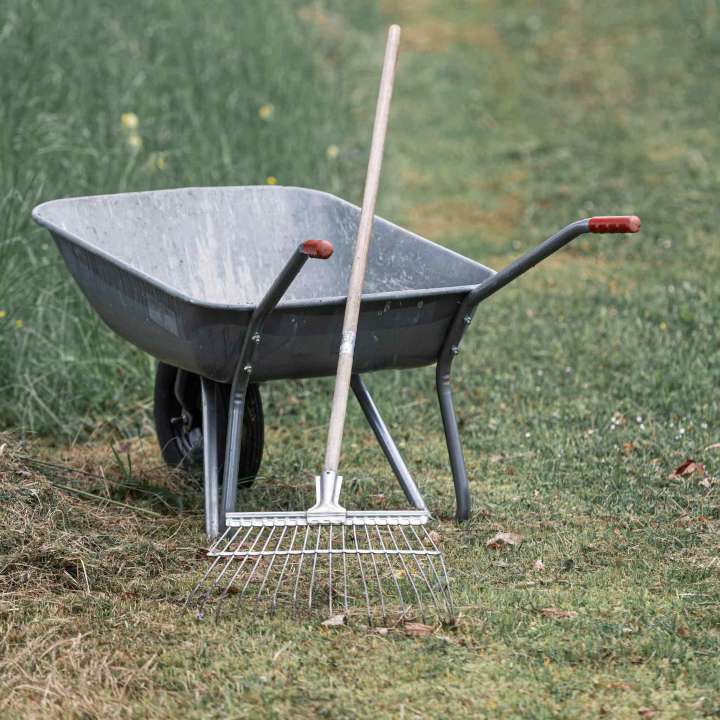
Scarifying is when a spring-tine rake is used on the lawn, pulling through the grass sward vigorously.

Scarifying reduces the build-up of thatch (dead grass, moss, etc.). This thatch layer stifles grass and impedes drainage. The easy option is to use a machine for the job, but vigorous raking provides a good workout.

What does Aerating mean?

Aerating your lawn is when holes are made in the soil to allow air, water and nutrients into the grass at the root. Encouraging a deeper root and stronger lawn.

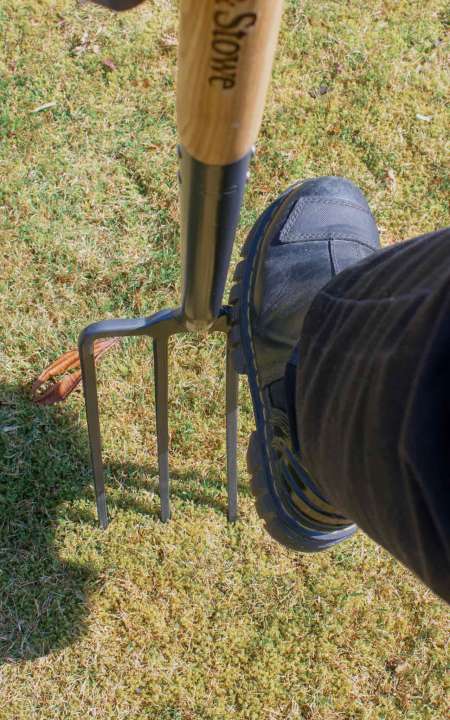
Aerating relieves compaction and encourages good drainage, reducing the growth of moss, lichens, algae and slime moulds, which become prominent in the cool, humid conditions encountered here in early autumn. Aerate using a hollow-tine corer or a garden fork, making holes 10cm deep, spaced 10-15cm apart. Brush a top dressing of sandy loam into the holes. This helps to protect exposed roots from penetrating frosts, which can start as early as next month.

Follow up with an application of autumn lawn fertiliser.
 

Top Tips

  • Scalping the grass too short when mowing can stunt a lawn's growth, whereas letting it grow too long causes thatch to build up and strangle the grass. Healthy grass must be kept at approximately one inch.
 
  • Over-acidic soil can favour moss on most lawns. Alkaline-rich products, such as garden lime can be applied when grass is thin, sparse and sprouting from soil with a ph. below 5.5
 
  • Puncturing especially mossy patches with a lawn aerator can relieve compaction in the soil. Making it harder for moss to re-establish.


You might also be interested in:

Cullen Skink Recipe

The soup originates from the town of Cullen in Moray, on the Scottish northeastern coast. Traditionally, the word "Skink" is used to describe a broth made with beef scrapings. In the 1980s, these scraps of beef became hard to come by. However, at this time, Cullen’s harbour was a thriving fishing port. So the people of the town decided to use smoked haddock in their soup. From this, the Cullen Skink we all love today was created.

Read more...
Traditional Scottish Shortbread

Shortbread is a favourite of all seasons and a traditional Scottish staple. It is an easy-to-make treat for all the family. A traditional treat for First Footing. Perfect event for Valentine's Day, Christmas, or even a little afternoon meet-up with friends and family!

Read more...
Traditional Neeps & Tatties

A traditional Scottish dish made of mashed turnips (specifically swedes or rutabagas, known as "neeps" in Scotland) and potatoes (referred to as "tatties"). This comforting side dish is famously served with haggis, especially during a Burns Supper on Burns Night (January 25th) or during Hogmanay celebrations.

Read more...
Looking After Your Christmas Wreath

Adorn your door with a real Christmas tree wreath, now available at Drum! Our Real Christmas wreaths are here, full of cheer and ready to make your neighbours jealous (and impress the postman)!

Read more...